Posts

Showing posts with the label Topics

PG NEXT Question of the Day 13-11-2016

Image
Identify the organism on the basis of the morphology of egg shown below a. Ascaris b. Enterobius c. Echinococcus d. Trichuris  Ans: B. Enterobius (Ref: K.D Chatterjee 13th edition, p227) Egg of Enterobius vermicularis: • Colourless- non bile stained • Asymmetrical shaped- flattened on one side and convex on the other side: Plano-convex/ D-shaped • Surrounded by a transparent shell • Contains a coiled tadpole like larva • Floats in saturated solution of common salt Click Here to Read Book Review Click Here to Buy

PG NEXT Question of the Day 12-11-2016

Image
The bacterial growth medium shown below belongs to  a. Enriched medium b. Enrichment medium c. Selective medium d. Indicator medium Ans: B. Enrichment medium (Ref: Ananthanarayan 9th edition, p28-33) Simple medium: nutrient agar and Mueller-Hinton agar Enriched medium: Blood agar, chocolate agar, egg and serum based medium  Enrichment medium: Selenite F and alkaline peptone water Differential medium: MacConkey agar and blood agar Selective medium: Lowenstein-Jensen medium, Thayer-Martin medium, Wilson and Blair medium Click Here to Read Book Review Click Here to Buy

PG NEXT Question of the Day 11-11-2016

Image
Identify the test depicted in the picture below a. Sodium fluoride test b. Teichmann test c. Diatoms test d. None of the above Ans: C. Diatoms test. Circular, triangular, oval, rectangular, linear, crescentic or boat shaped with silica wall, chlorophyll and brown pigment Diatomin. Ref: KSN Reddy, Essentials of Forensic Medicine & Toxicology, 33rd ed, p 371. Click Here to Read Book Review Click Here to Buy

PG NEXT Question of the Day 09-11-2016

Image
       Identify the finger print pattern given below a.       Whorl b.       Arch c.        Loop d.       Composite Ans: D. Composite type. Composite type has more than one fingerprint type in a finger. Ref: KSN Reddy, Essentials of Forensic Medicine & Toxicology, 33rd ed, p 85. Click Here to Read Book Review Click Here to Buy

PG NEXT Question of the Day 06-11-2016

Image
   Mode of torture shown in the below pic is a.       Telefona b.       Falanga c.        Mugging d.       Garrotting Ans: B. Falanga . Canes or rods are used to beat on soles of foot, or rarely to palm of hips or hips. Ref: KSN Reddy, Essentials of Forensic Medicine & Toxicology, 33rd ed, p 298. Click Here to Read Book Review Click Here to Buy
ART under NACP

Image
ART guidelines released by NACO (2013). ART now given <500 CD4 count under National AIDS Control Program (Source: NACO Website) Further Reading:  https://goo.gl/o3BWrq

PG NEXT Question of the Day 04-11-2016

Image
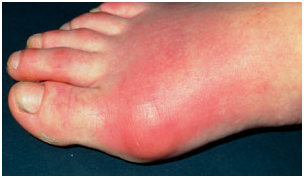
The photograph shown below is as a result of disorder of a. Purine b. Pyrimidine c. Glycogen d. Fatty acid synthesis Answer : A) Purine Harper’s illustrated Biochemistry , 30th ed , page 354 GOUT IS A METABOLIC DISORDER OF PURINE CATABOLISM Various genetic defects in PRPP synthase present clinically as gout. Each defect—for example, an elevated V max, increased affinity for ribose 5-phosphate, or resistance to feedback inhibition—results in overproduction and over excretion of purine catabolites. When serum urate levels exceed the solubility limit, sodium urate crystalizes in soft tissues and joints and causes an inflammatory reaction, gouty arthritis. However, most cases of gout reflect abnormalities in renal handling of uric acid. While purine deficiency states are rare in human subjects, there are numerous genetic disorders of purine catabolism. Hyperuricemias may be differentiated based on whether patients excrete normal or excessive quantit...

PG NEXT Question of the Day 02-11-2016

Image
Question The food item shown below is a rich source of  a. Vitamin C b. Vitamin A c. Vitamin D d. Vitamin K Answer : a) Vitamin C DM Vasudevan , Textbook of biochemistry for medical students , 7th ed ,  page 496 It is water soluble and is easily destroyed by heat, alkali and storage. In the process of cooking, 70% of vitamin C is lost.Most animals and plants can synthesize ascorbic acid from  glucose. Man, higher primates, guinea pigs and bats are the only species which cannot synthesize ascorbic acid (block in gulonolactone oxidase step). They lack the genes responsible for the synthesis of this enzyme.  Biochemical functions of vitamin C include reversible oxidation reduction , hydroxylation of proline and lysine , metabolism of Tryptophan , tyrosine , iron ,haemoglobin and folic acid , Steroid syntehesis , Phagocytosis and antioxidant property. Manifestations of Vitamin C Deficiency : Scurvy , Barlows Disease , Hemorrhag...

PG NEXT Question of the Day 01-11-2016

Image
Question: Identify the scientists in the photo  a.       Watson and crick b.       Lewis and McNeal c.        Huger and Rutherford d.       Saulter and Williams Answer :  a) Watson and Crick Lehninger’s Principles of Biochemistry , 6 th ed , page 279& Harper’s Illustrated Biochemistry , 30 th ed. Page 361 The discovery of the structure of DNA by Watson and Crick in 1953 was a momentous event in science, an event that gave rise to entirely new disciplines and influenced the course of many established ones. Our present understanding of the storage and utilization of a cell’s genetic information is based on work made possible by this discovery, and an outline of how genetic information is processed by the cell is now a prerequisite for the discussion of any area of biochemistry. The central dogma in molecular biology postulated by Wat...

PG NEXT Question of the Day 31-10-2016

Image
Question : The below figure represents the compliance curve of lung. What does the marked area correspond to? a. Inspiration b. Expiration c. Residual volume d. FRC Answer : a. Inspiration Explanation : Compliance is developed due to the tendency for tissue to resume its original position after an applied force has been removed. After an inspiration during quiet breathing (eg, at the FRC), the lungs have a tendency to collapse and the chest wall has a tendency to expand. Compliance of the lung and chest wall is measured as the slope of the P TR curve, or, as a change in lung volume per unit change in airway pressure (ΔV/ΔP). Click Here to Read Book Review Click Here to Buy

PG NEXT Question of the Day 30-10-2016

Image
Question : What is depicted in the following image? a.       Migrating motor complex b.       Phases of deglutition c.        Acid wave form in GERD d.       The recording of action potential in interstitial cells of Cajal Answer: a. Migratory motor complex Migrating motor complex (MMC), starts with a quiescent period(phase I), continues with a period of irregular electrical and mechanical activity (phase II), and ends with a burst of regular activity (phase III). The contractions migrate aborally at a rate of about 5 cm/min, and also occur at intervals of approximately 100 min. Gastric secretion, bile flow, and pancreatic secretion increase during each MMC. Click Here to Read Book Review Click Here to Buy

PG NEXT Question of the Day 29-10-2016

Image
Question : Identify the respiratory pattern shown below  a. Cheyne stokes breathing b. Shallow breathing c. Normal breathing d. Medullary breathing Answer: a. Cheyne stokes breathing It is mostly seen in patients with congestive heart failure and uremia. In these individuals CO2 causes relative hyperventilation lowering the arterial PCO2. During the resultant apnoea, the arterial PCO2 again rises to normal but the respiratory mechanism again over responds to CO2. Breathing ceases and the cycle repeats. Click Here to Read Book Review Click Here to Buy

PG NEXT Question of the Day 28-10-2016

Image
Question : The marked structure shown in the photograph closes at the age of  a. 6 months b. 2 years c. 3 years d. 6 years Ans : b. 2 years Ref : Essentials of human Anatomy, part-II, A.K.Datta,5th edition,page – 14 Explanation : • The marked structure is metopic suture between two halves of frontal bones • Each half of frontal bone ossifies from one primary centre around the age of 8th week of intrauterine life • At birth, 2 halves of frontal bone are united by Metopic suture (fibrous joint) • Metopic suture is completely replaced by bone at about 2 years • Premature closure of metopic suture is – Trigonocephaly Click Here to Read Book Review Click Here to Buy

PG NEXT Question of the Day 27-10-2016

Image
Question : Nerve supply of the area shown in the photograph is  a. Superficial part of radial nerve b. Deep branch of radial nerve c. Median nerve d. Ulnar nerve Ans : c. Median nerve Ref : Moore, clinically oriented Anatomy, 7th edition, page – 785 Explanation : Nerve supply of digits: • Palmar surface – o Lateral 3 ½ digits including the distal half of their dorsum, skin of central palm – median nerve & its cutaneous branch o Medial 1 ½ digits & skin of medial palm – ulnar nerve & its cutaneous branch • Dorsal surface – o Lateral 3 ½ digits excluding their distal half & skin of lateral half of dorsum – superficial branch of radial nerve o Medial 1 ½ digits & skin of medial aspect of dorsum – ulnar nerve & its cutaneous branch • So the tip of index finger is innervated by median nerve Click Here to Read Book Review Click Here to Buy

PG NEXT Question of the Day 26-10-2016

Image
Question : Ossification centre of the bone marked B is  a. Birth b. 2 years c. 4 years d. 6 years Ans : c. 4 years Ref : Gray's Anatomy, 41st edition, page – 869 Explanation : • Bones marked in the picture are: A. Scaphoid B. Lunate C. Triquetral D. Pisiform E. Trapezium F. Trapezoid G. Capitate H. Hamate • Ossification of carpals: o Capitate-2nd month o Hamate – 3rd month o Triquetral – 3rd year o Lunate – 4th year o Scaphoid -4-5yrs o Trapezium – 4-5yrs o Trapezoid – 4-5 yrs o Pisiform – 9-12 yrs • Remember the names of bones & for ossification, remember the age in reverse order starting from capitate. Click Here to Read Book Review Click Here to Buy

PG NEXT Question of the Day 25-10-2016

Image
Question : Phase 4 clinical trial is also called as a. Human pharmacology and safety b. Post marketing surveillance c. Therapeutic exploration & dose ranging d. Therapeutic confirmation Answer : b. Post marketing surveillance Explanation : Therapeutic use (post-licensing studies) – Surveillance foe safety and efficacy: further formal therapeutic trials, especially comparisons with other drugs, marketing studies and pharmacoeconomic studies. Reference : 1. Goodman & Gilman’s The Pharmacological Basis of Therapeutics, 12e, p. 1054 2. Bennett & Brown Clinical Pharmacology, 9e, p.56 Click Here to Read Book Review Click Here to Buy

Nonthermal Ablation Safe, Feasible for Liver Cancer

Image
A novel ablation technique that does not rely on heat or cold is a safe and feasible way to target malignant liver lesions that are difficult to ablate because of their proximity to major arteries and veins, according to new research. "Other ablation techniques, including radiofrequency ablation, use either heat or cold to destroy malignant lesions," Philippe Wiggermann, MD, from the University of Regensburg in Germany, told  Medscape Medical News . "If you use conventional ablation, you have this 'heat sink' effect and you risk destroying larger vessels if the lesions are close to an artery or portal vein. However, with percutaneous irreversible electroporation, strong electrical pulses cause permanent disruption of the cell membrane, and the ablated tissue dies without causing collateral damage," Dr. Wiggermann explained. His team used percutaneous irreversible electroporation to treat 28 liver tumors not suitable for conventional therapy or loca...

NBE Pattern Questions: Today's Top Ten 13-11-2015

Image
1.              Which insulin is never mixed with other insulins – Glargine 2.              Heparin is a – Polysaccharide 3.              Von Herick angle grade 3 of anterior chamber denotes – Moderately open angle 4.              Pin hole can reduce refractive error upto – 3D 5.              MC variant of Takayasu disease in India is – Type 3 6.              Acrodermatitis hemorrhagica is due to deficience of – Zinc 7.              Which looks same on T1 & T2 on MRI – Fat 8.              Car...