Posts

Showing posts with the label Health Policy

Moving forward with a newer concept of Universal Health Care

Image
It must encompass primary, secondary and tertiary care for all who need it, and at affordable cost without discrimination Do we believe in health as a basic human right, which India’s Constitution guarantees under right to life? In contrast, we believe in the World Health Organization (WHO) definition of health: a certain totality of health to the realms of mental and social well-being and happiness beyond physical fitness, and an absence of disease and disability. This means that we cannot achieve health in its wider definition without addressing health determinants. This necessitates a need for an intersectoral convergence beyond medical and health departments such as women and child development, food and nutrition, agriculture and animal husbandry, civil supplies, rural water supply and sanitation, social welfare, tribal welfare, education, forestry. Healthcare As An Optional Public Service (HOPS) as a route to universal health care We all subscribed to the slogan “Health for All by...
Baby steps for tackling India’s malnutrition woes

Image
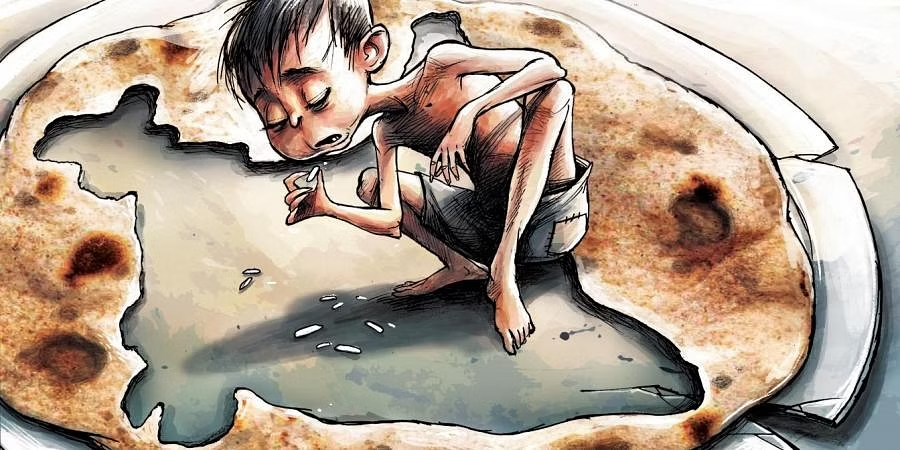
By Dr K Srinath Reddy A mix of dismay and debate has been the reaction to the persistently high rates of childhood undernutrition reported by the last National Family Health Survey. Dismay because the reported prevalence of 35.5% stunting, 32.1% underweight and 19.3% wasting in children under five years of age does not bode well for their present and future health or cognitive development.   The debate centres around the question of whether the global standards by which these metrics are defined, are applicable to Indian children. Another area of concern is whether such children will be harmed by supplementary feeding because it may make them stunted and obese as an unintended consequence.   Undernourished children are highly susceptible to serious infections because of poor immunity. They are physically inactive because of low muscle mass and reduced lung capacity. They suffer cognitive impairment, which diminishes their potential for education and employment. This ...

Budget’s missed healthcare opportunity

Image
The Covid pandemic has amply demonstrated the health sector’s direct and indirect intersectoral impacts and its devastating power in creating disruption. It was, therefore, not surprising to see its imprint on the Economic Survey. Given the learnings of the pandemic, it was reasonable to expect a “health-centred” budget. That was not to be. The budget’s main focus is on increasing capital expenditures for expanding the economic infrastructure under the PM Gati Shakti scheme. TV discussions centred around the GDP, as if a 7.7 per cent or an 8.2 per cent recovery holds any meaning for the millions who have been impoverished by the pandemic-induced income losses, hunger, sickness and trauma. Inequalities have widened. An estimated Rs 70,000 crore have been spent by the people out-of-pocket in this short time for medical treatment that the government ought to have provided. Spending at a time when earnings were down, pushed millions below the poverty line and hunger has emerged as a major ...

Covid-19 vaccine private-govt split worries doctors

Image
The health ministry hasn't explained the criteria to decide how the 11 million doses of Covishield, and 5.5 million of Covaxin would be split between states   The nationwide Covid-19 vaccination drive starts on Saturday amid speculation among some doctors whether the home-grown vaccine, which is yet to prove its efficacy, is being sent to public institutions that have fewer opportunities to question the decision. The doctors who have questioned the inclusion of the home-grown Covaxin from Bharat Biotech alongside the AstraZeneca-Oxford vaccine at the start of the inoculation campaign say the proposed split of the two vaccines in Delhi has amplified their concerns. Six government hospitals in Delhi will receive Covaxin while all the 42 private hospitals will receive the AstraZeneca-Oxford vaccine, Covishield, produced in India by the Serum Institute of India, according to a document received by the sites. While government district hospitals will also receive Covishield with the priv...

Preparing India for tomorrow’s pandemics

Image
Early detection is key to minimising health and economic burdens Chandra Mohan The history of mankind is replete with ravaging pandemics that have wiped out civilisations. Now Covid-19 has spread to more than 180 countries, infected upwards of 83 million, and killed 1.8 million people in just one year. In India, in 1918 the Spanish Flu killed more than 13 million in just three months. And within the last year the country has reported more than 10 million Covid cases and 1.48 lakh deaths. Insights provided by Pasteur’s germ theory of disease, rapid advances in the development of new anti-microbial drugs and vaccines, improved housing, sanitation, and clean drinking water have dramatically reduced the burden of infectious diseases over time. Life expectancy in India increased from 32 years in 1947 to 69 years in 2020 leading to the illusion that the scourge of infectious diseases has been conquered. Nothing could be further from the truth. Increasing drug resistance, newly emerging infec...

Allopathy & ayurveda: A study in difference

Image
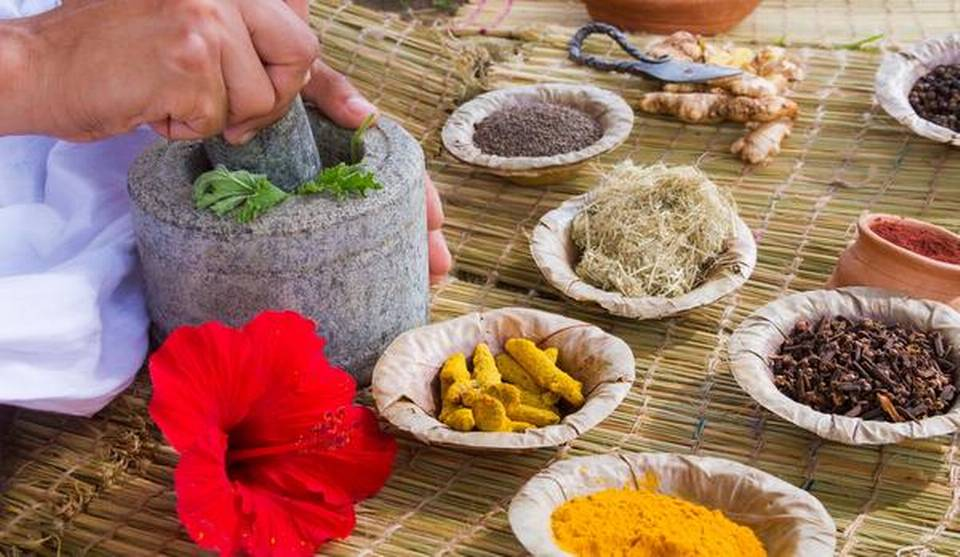
Ayurveda practitioners are seeking equivalence with allopathic doctors in doing certain surgeries, but there seems to be a vast difference in the amount of training received in the two systems. Everything from the minimum number of beds in teaching hospitals to bed occupancy and the outpatient attendance required in a medical college to be allowed to do undergraduate and postgraduate training is much less for ayurveda colleges than for allopathic ones. Barely a quarter of the 414 ayurveda colleges have 100 seats. Nearly two-thirds (64%) of UG ayurveda seats are in colleges with 60 seats or less, which need to have just a 60-bedded teaching hospital with 40% occupancy, or about 24 beds occupied. Of the 60 beds, beds that must be kept aside for shalakya tantra and shalya tantra (surgeries) are just 25. In comparison, almost all MBBS colleges have at least 100 MBBS seats and for that they need a 500-bed teaching hospital with 75% occupancy (375 beds) and 120 beds kept aside for general ...

A misguided policy that cuts deep into patient safety

Image
It is impossible for Ayurveda to incorporate surgical techniques while ignoring the other domains of modern medicine The basic requirement of medical practice is the safety of the patient. Surgery is a branch of medicine in which poor training can have dramatic and disastrous results. This is the strongest argument against the ill-advised move of the government of India to allow graduates in Ayurveda to practise surgery. Apprenticeship is key Surgery in the present era is an interdisciplinary endeavour. A well-trained anaesthesiologist keeps the patient free of pain. Other specialist doctors address any other illnesses that the patient has before surgery can be safely performed. The well-trained surgeon must have a good knowledge of the structure of the human body in health and disease. This is one branch of medicine where knowledge can only be acquired through apprenticeship — that is, the learner needs to be guided by an expert. It takes many years and much exposure before a gr...

Ayurvedic doctors and sanction for surgeries

Image
  Dr Anant Bhan Is allowing Ayurvedic doctors to perform surgery legally and medically tenable? What are the issues around allowing non-allopathic surgeons to receive training for various procedures? The story so far: On November 20, the Central Council of Indian Medicine, a statutory body set up under the AYUSH Ministry to regulate Indian systems of medicine, issued a gazette notification allowing postgraduate (PG) Ayurvedic practitioners to receive formal training for a variety of general surgery, ENT, ophthalmology and dental procedures. The decision follows the amendment to the Indian Medicine Central Council (Post Graduate Ayurveda Education) Regulations, 2016, to allow PG students of Ayurveda to practise general surgery. Is allowing non-allopathic doctors to perform surgery legally and medically tenable? The passing of the National Medical Commission Act in 2019 allowed for the formalisation of proposals to induct mid-level care providers — Community Health Providers...

West Bengal doctors’ body opposes move to permit surgery by Ayurveda students

Image
  A leading doctors’ body in West Bengal has strongly opposed the Centre’s decision to train practitioners of alternative medicine to perform surgical procedures, saying such ‘crosspathy’ or ‘mixopathy’ was anti-people and anti-science. Last week, the Central Council of Indian Medicine issued a notification allowing post-graduate scholars of the Shalya and Shalakya streams of Ayurveda to independently perform 58 kinds of surgeries including those related to the eye and the ears, nose and throat. The Council subsequently issued a ‘clarification’ saying these surgeries were being performed by Ayurveda professionals “since beginning” and that all scientific advances including standardised terminologies were inheritances of entire mankind and no group could claim monopoly over these. “We don’t have any disregard for other streams of medicine; in fact, we have great respect for ancient medicine. But just as how I am not competent to prescribe Ayurvedic medicines, can an Ayurveda pra...