Posts

Family adoption will enrich medical education

Image
There has been just criticism that medical education in India has become disconnected from rural reality as it was mostly taught in hospitals attached to medical colleges in highly urbanised locations By K Srinath Reddy Earlier this year, the National Medical Commission (NMC) advised medical colleges to alter the pattern of medical education by connecting undergraduate students to families in rural communities. The ‘family adoption programme’ links each medical student to three to five rural families. The student would need to visit these families once a month. With supportive supervision from a faculty member of the college, the student would get acquainted with the health problems of the family members, chart their course and assist in their management through facilitation of telehealth consultations and referrals to healthcare facilities if need be. The objectives of this reform, which would supplement the standard medical curriculum, are to orient young medical students to commonly...

A cure that may be worse than the disease

Image
  The new rule : Families of patients can no longer appeal to the National Medical Commission (NMC) against decisions of state medical councils, reports  TOI . The appeals are being rejected citing Section 30(3) of the NMC Act of 2019, which replaced the Indian Medical Council Act. Section 30(3) refers to the right of only medical practitioners or professionals who are aggrieved by any action of a state medical council and allows an appeal to the Ethics and Medical Registration Board (EMRB) of the NMC. The old rule : In May 2004, the MCI's Ethics Regulations 2002 were amended to include two clauses, one of which gave "any person aggrieved by the decision of state medical councils on any complaint against a delinquent physician the right to file an appeal to the MCI" while the other gave MCI the power to transfer a matter from state medical councils if it was not decided within a period of six months from the date of the complaint. This means : "This change in the new...

Budget’s missed healthcare opportunity

Image
The Covid pandemic has amply demonstrated the health sector’s direct and indirect intersectoral impacts and its devastating power in creating disruption. It was, therefore, not surprising to see its imprint on the Economic Survey. Given the learnings of the pandemic, it was reasonable to expect a “health-centred” budget. That was not to be. The budget’s main focus is on increasing capital expenditures for expanding the economic infrastructure under the PM Gati Shakti scheme. TV discussions centred around the GDP, as if a 7.7 per cent or an 8.2 per cent recovery holds any meaning for the millions who have been impoverished by the pandemic-induced income losses, hunger, sickness and trauma. Inequalities have widened. An estimated Rs 70,000 crore have been spent by the people out-of-pocket in this short time for medical treatment that the government ought to have provided. Spending at a time when earnings were down, pushed millions below the poverty line and hunger has emerged as a major ...

NEET SS 2021 | Centre tells Supreme Court it has dropped plan for new exam pattern

Faced with criticism, govt. says scheme has been put off to 2022 The government on Wednesday, October 6, 2021, turned around to inform the Supreme Court that it has dropped its decision to implement a new exam pattern for National Eligibility-cum- Entrance Test- Super Specialty (NEET-SS) 2021 due in November. Faced with criticism from the court for the sudden manner in which the new pattern has been introduced at the last minute this academic year, the Centre, represented by Additional Solicitor-General Aishwarya Bhati, said the implementation of the new exam pattern has been postponed to 2022. The November 2021 exam would follow the existing exam pattern, Ms. Bhati submitted. “In deference of your lordship’s observations & interest of students, the Centre has decided that the revised scheme will be implemented from 2022. The present exam will be held based on the 2020 scheme,” Ms. Bhati submitted. A Bench led by Justice D.Y. Chandrachud expressed its satisfaction with th...

Building consent: On PG Medical Education Regulations 2021

A consensus on the Postgraduate Medical Education Regulations 2021 is a must The Indian Medical Association (IMA), the largest organisation of doctors in India, has demanded that the National Medical Commission (NMC) withdraw the draft Postgraduate Medical Education Regulations 2021. In its current form, it notes that there shall be common counselling for admission in all medical educational institutions to all Post-graduate ‘Broad-Specialty’ courses (Diploma/MD/MS) on the basis of the merit list of the National Exit Test. Currently, admissions to such programmes are based on the post-graduate NEET. Half the seats to the various courses are based on the all-India quota and the rest are admitted by the State governments, which comply with reservation norms. The IMA contends that the draft regulations leave States with no power or discretion to manage admissions to State medical colleges, which rely on State funds. If States did not have the freedom to decide on student intake, they woul...

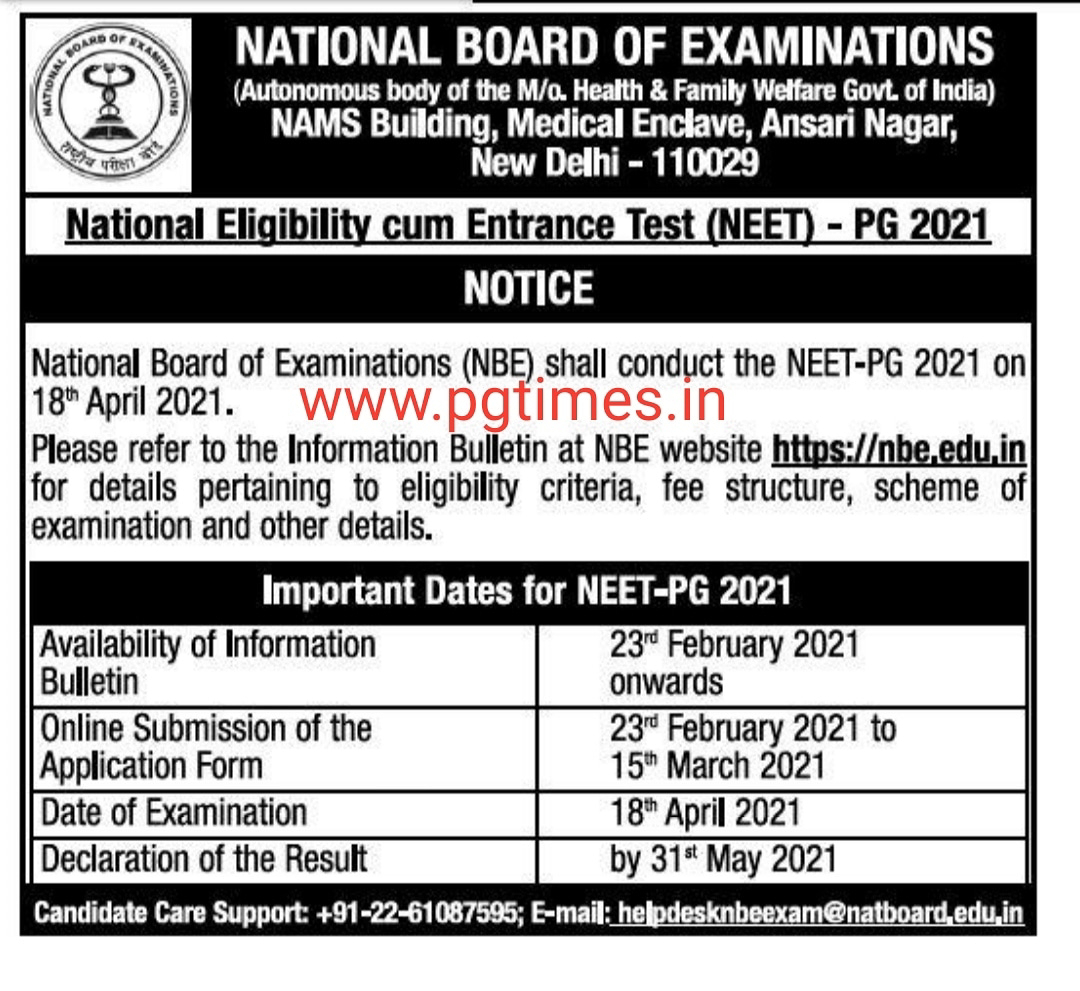
NEET-PG 2021 Notification

Image

India’s troubled history of vaccination

Image
On June 14, 1802, three-year-old Anna Dusthall became the first child in India to successfully receive the smallpox vaccine. Only the barest details are known about Dusthall— she was a healthy girl, possibly of mixed racial identity, “remarkably good tempered” — a trait crucial to the vaccination’s success — and, from the pus that formed on her skin upon vaccination, five more children were vaccinated in the city of Bombay. Thereon, enough vaccine material was collected using her lymph and sent to Poona, Surat, Hyderabad, Ceylon, Madras and more places along the coast and the Deccan. Dr Helenus Scott, the physician who vaccinated her, hoped that with the availability of the vaccine, “one of the greatest evils that has afflicted humanity” would be diminished or even extinguished. His wish would take root, but not before a confusing century, riddled with challenges and challengers, passed by. As recent research indicates, the history of smallpox vaccination in colonial India wasn’t a sim...